
Crisis situations demand experience, discretion, and authority.
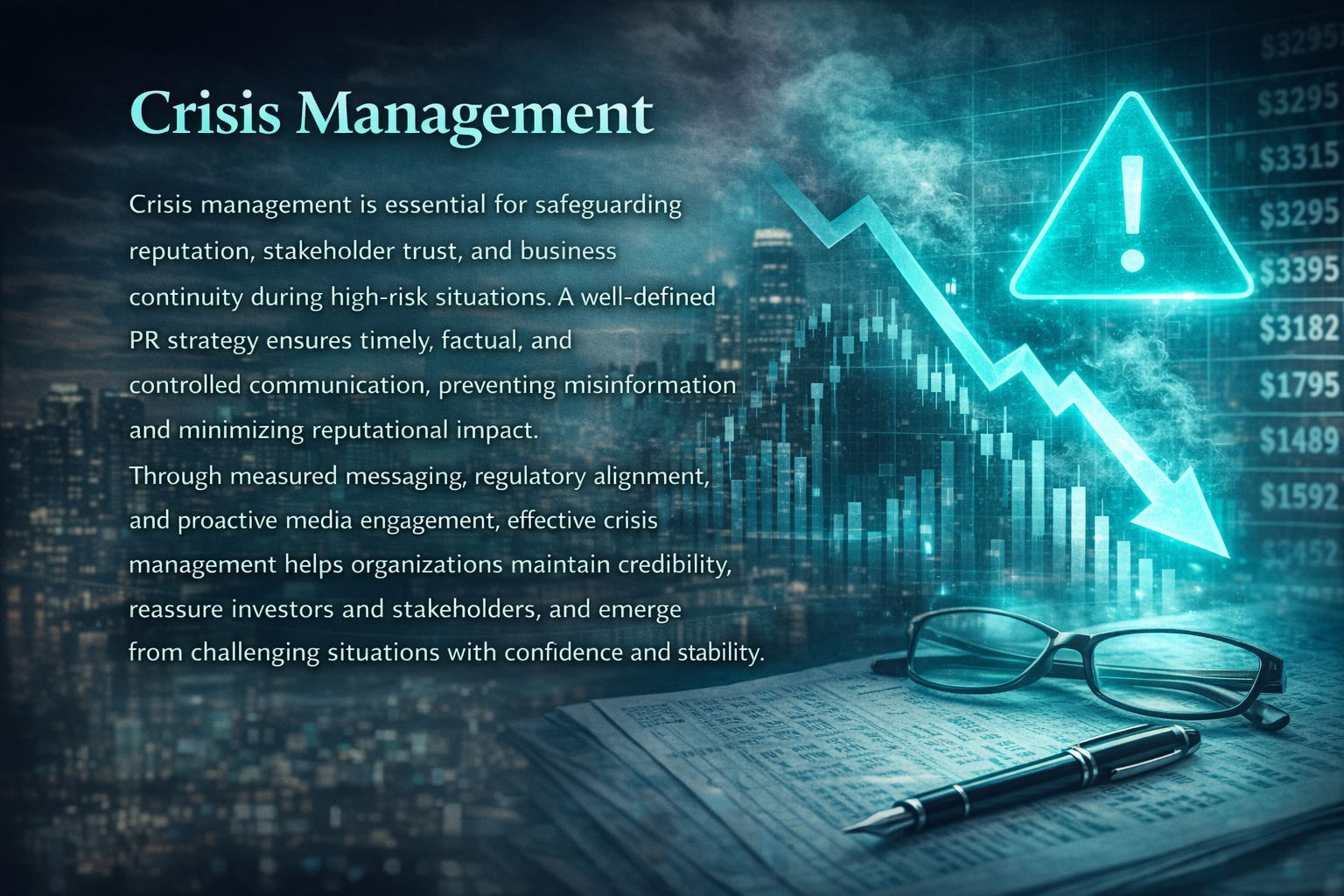
At IPO Friends Media PR, we act as your strategic communication shield—protecting trust when it matters most. Crisis management is essential for safeguarding reputation, stakeholder trust, and business continuity during high-risk situations. A well-defined PR strategy ensures timely, factual, and controlled communication, preventing misinformation and minimizing reputational impact. Through measured messaging, regulatory alignment, and proactive media engagement, effective crisis management helps organizations maintain credibility, reassure investors and stakeholders, and emerge from challenging situations with confidence and stability.
Our Crisis Management Expertise
IPO & Capital Market–Focused Crisis Handling
We understand the heightened sensitivity during:
IPO filings & roadshows
Listing days & post-listing volatility
Earnings announcements
Regulatory disclosures & clarifications
Our strategies are aligned with capital market communication protocols and investor expectations.
Our Crisis Management Framework
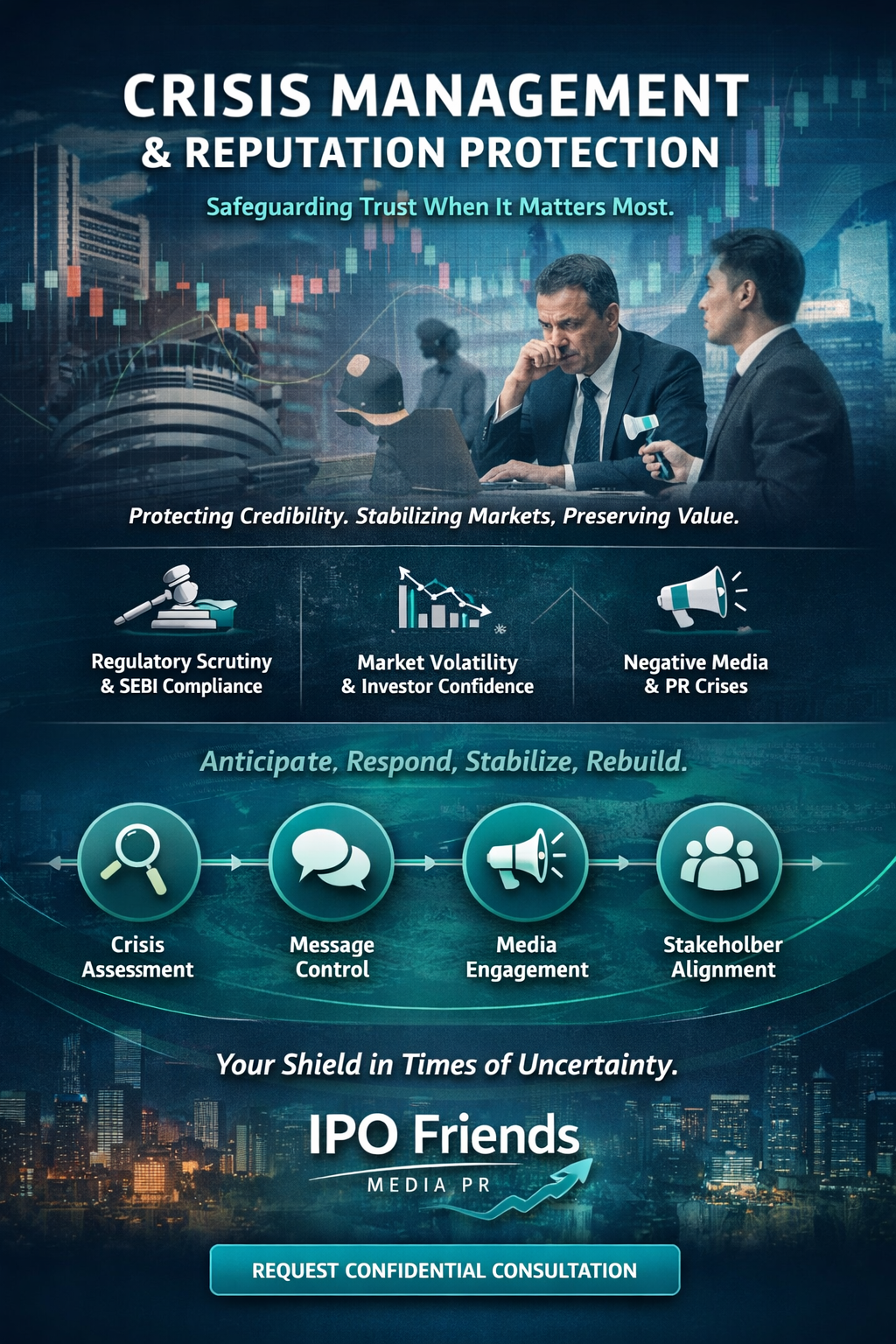
Anticipate. Respond. Stabilize. Rebuild.
Crisis Assessment – Identifying reputational, regulatory, and market risk
Message Control – Clear, factual, and confidence-building communication
Media Engagement – Strategic outreach to trusted financial media
Stakeholder Alignment – Investors, analysts, regulators, employees
Reputation Recovery – Rebuilding trust post-crisis through sustained PR
What Sets IPO Friends Media PR Apart
Deep IPO & Financial PR specialization
Strong financial media relationships
Calm, data-backed communication approach
Pan-India & international market understanding
Proven experience with sensitive, high-stakes situations
When Should You Engage a Crisis Management Partner?
You should engage a crisis management partner before filing for an IPO, during periods of regulatory scrutiny, at the first signs of negative media coverage or market rumors, or when investor confidence begins to waver. Early intervention allows potential risks to be assessed, narratives to be controlled, and stakeholder communication to be aligned before issues escalate. In high-stakes environments like capital markets, proactive crisis management doesn’t just limit damage—it preserves credibility, stabilizes sentiment, and ensures stronger long-term outcomes.